

AI & intelligent services
The engineering that turns a working model into a system people rely on.
Custom AI applications, integration into the landscape you already run, and deployment into an environment your security team will sign off — cloud, private cloud, on-premises, hybrid or sovereign.
Custom applications · Integration · LLM engineering · MLOps & LLMOps · Deployment
01 — Where prototypes die
The model was never the hard part.
Everything around it is.
A prototype needs a model and a demo dataset. A system needs identity, entitlements, integration, error handling, observability, cost control, versioning, rollback and a deployment path your security review will accept.
That is ordinary — if unglamorous — software engineering, and it is where most enterprise AI effort actually goes. We treat AI systems as production software from the first commit rather than promoting a notebook and hoping.
Because our teams build on the same foundations across engagements, the parts that are identical every time — connectors, retrieval, orchestration, guardrails, audit — are reused rather than rewritten, and the budget goes to what is specific to you.
Talk to Zealogics02 — What we build
Applications, services and the plumbing between them.
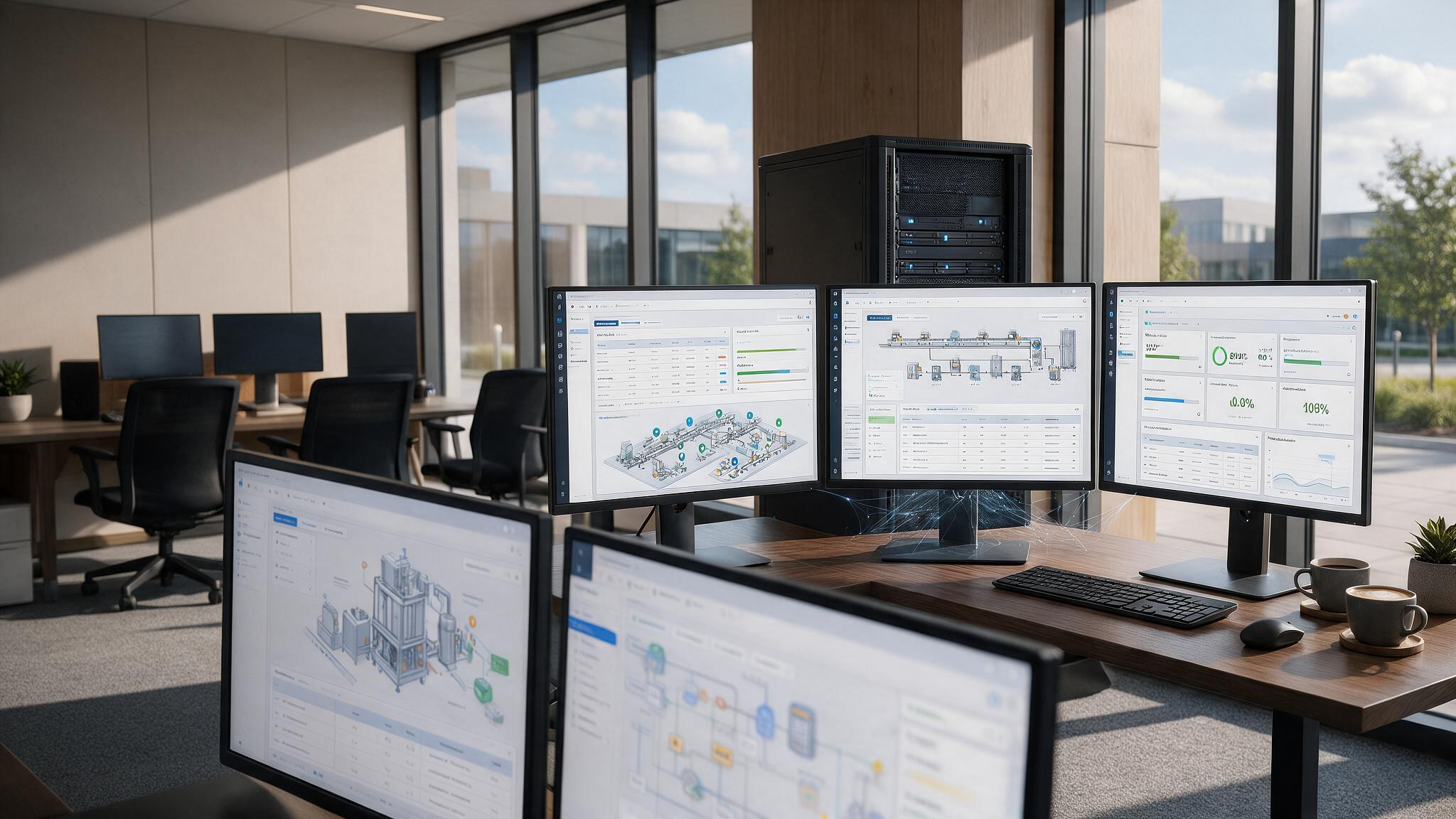
PRODUCTION SOFTWARE THAT HAPPENS TO USE AI.
03 — What the work covers
Six engineering disciplines under one team.
Non-functionals we design for
Identity, single sign-on and entitlements
Latency and throughput budgets
Cost per request and per tenant
Failure, retry and degradation behaviour
Observability, tracing and alerting
Data residency and retention
Typical stack
Custom AI applications
Full-stack products around an AI capability — the interface, the workflow, the permissions and the administration, not just an endpoint.
Enterprise integration
Connectors and services against ERP, CRM, EAM, ITSM, HR and data platforms, with authentication, retry and reconciliation handled properly.
LLM engineering
Prompt and context architecture, structured output, tool schemas, routing between models, caching and cost control — versioned and tested like any other code.
Model engineering
Classical machine learning, vision and forecasting where they beat a language model, including training, tuning and the pipelines behind them.
MLOps and LLMOps
CI/CD for models, prompts and datasets; environment promotion; evaluation gates inside the pipeline; and rollback that actually works.
Deployment and hardening
Cloud, private cloud, on-premises, hybrid or sovereign, with secrets management, network posture, logging and the evidence a security review will ask for.
04 — What ships with the system
Six things handed over alongside the code.
A system your own engineers cannot run, review or replace is not finished, however well it demonstrates.
01
A deployment path
Infrastructure as code, environments and a promotion route, from day one rather than at the end.
02
An evaluation gate
Quality checks run in the pipeline, and a regression blocks the release.
03
Observability
Traces, metrics, cost and quality visible to whoever runs it.
04
Documentation
Architecture, runbooks and handover material written for your engineers.
05
A security package
The artefacts your review needs — data flows, controls, dependencies and threat notes.
06
An exit route
No lock-in by accident: your code, your data, your infrastructure.
05 — How the build runs
Increments you can see, from the second week.
Two-week increments against a working system, so the direction is correctable while correcting it is still cheap.
Architect
Solution and data architecture, non-functionals, and the deployment target.
Build
Working software each increment, reviewed against real data.
Integrate
Enterprise systems, identity and data flows, tested end to end.
Harden
Security, performance, cost, failure behaviour and the evidence pack.
Deploy
Release into your environment, with handover and runbooks.
06 — How it fits
Your landscape, with AI services inside it.

INTEGRATED, NOT ADJACENT.
07 — Sound familiar?
Where engineering work gets called in.
“Our proof of concept cannot pass a security review.”
Hardening & deployment
“It works on sample data and falls over on ours.”
Data & integration engineering
“This has to run inside our own network.”
On-premises deployment
“Nobody can tell us what it will cost per month.”
Cost engineering
“Every AI project here rebuilds the same connectors.”
Platform foundations
“We want our own team to own it afterwards.”
Build and hand over
08 — The rest of the practice
Seven more ways we work on AI.
These services are rarely bought one at a time. Most programmes start with one and pull in the others as the work matures.
Advise
AI Strategy & Advisory
Work out which AI opportunities are real, what they are worth and the order to do them in — before anyone builds anything.
Explore
Transform
AI Transformation Services
Rebuild an end-to-end process around AI — the workflow, the systems, the roles and the measures — so the gain is structural.
Explore
Automate
Agentic AI & Automation
Agents that carry multi-step work across your systems under guardrails, evaluation and human approval.
Explore
Ground
Generative AI Solutions
Copilots, assistants and knowledge systems grounded in the material you approve — with citations, permissions and review.
Explore
Design
AI Experience Design
Human-centred research, interaction design and interfaces that let people understand, trust and keep using what AI does for them.
Explore
Govern
AI Governance & Responsible AI
The framework, guardrails, evaluation and audit trail that let a risk committee approve an AI system.
Explore
Operate
AI Managed Services
We run what we built — and what others built — with monitoring, evaluation, upkeep, cost management and real support.
Explore
Have a problem worth solving?
Bring us the prototype that cannot ship.
Most of them are closer than they look. We will tell you what stands between it and production, and what that actually costs.